Tracing Software Lineages in Real-Time Poker: Provider Impacts on Table Authenticity
Written by Taylor Jung · Jul 17, 2026

Tracing Software Lineages in Real-Time Poker: Provider Impacts on Table Authenticity
Real-time poker platforms rely on layered software architectures that trace back through successive generations of code from major providers, and these lineages shape how tables maintain visual and operational authenticity for players worldwide. Research from industry reports shows that code inheritance patterns determine everything from card shuffle algorithms to dealer avatar rendering, while data from regulatory filings indicates consistent upgrades have occurred across major networks since the early 2010s.
Origins and Early Code Branches
Initial poker software emerged from RNG-focused developers in the late 1990s, and those foundational modules migrated into live dealer systems through acquisitions and forks that occurred in the 2000s. Providers such as Microgaming and Playtech established core engines that later companies adapted, with observers noting that many current authentication protocols still reference checksum routines developed during that period. Data from Nevada Gaming Control Board audits reveal that early RNG certification standards influenced subsequent live-streaming frameworks, creating traceable inheritance lines that persist into 2026.
Major Provider Lineages and Code Migration
Evolution Gaming expanded from casino roots into poker by integrating proprietary video codecs, whereas Playtech followed parallel development paths through separate acquisitions that preserved distinct rendering pipelines. Those who've examined provider documentation observe that Evolution's live table modules incorporate elements from its original 2006 codebase, while competitors integrated open-source compression libraries during the 2015-2020 transition to HD streaming. Figures released in regulatory summaries show that these divergent paths result in measurable differences in latency handling, with some platforms achieving sub-200 millisecond round-trip times by July 2026.
Impacts on Visual and Operational Authenticity
Table authenticity depends on consistent lighting models, card physics simulation, and dealer behavior patterns, and software lineages directly control how these elements render across devices. Studies conducted by European research institutions found that platforms inheriting older physics engines display slight variations in card flip animations compared to newer unified frameworks, although players rarely detect these discrepancies without frame-by-frame analysis. According to data compiled by the Malta Gaming Authority, providers that maintained separate development branches for poker versus blackjack experienced higher rates of synchronization errors during multi-table sessions.
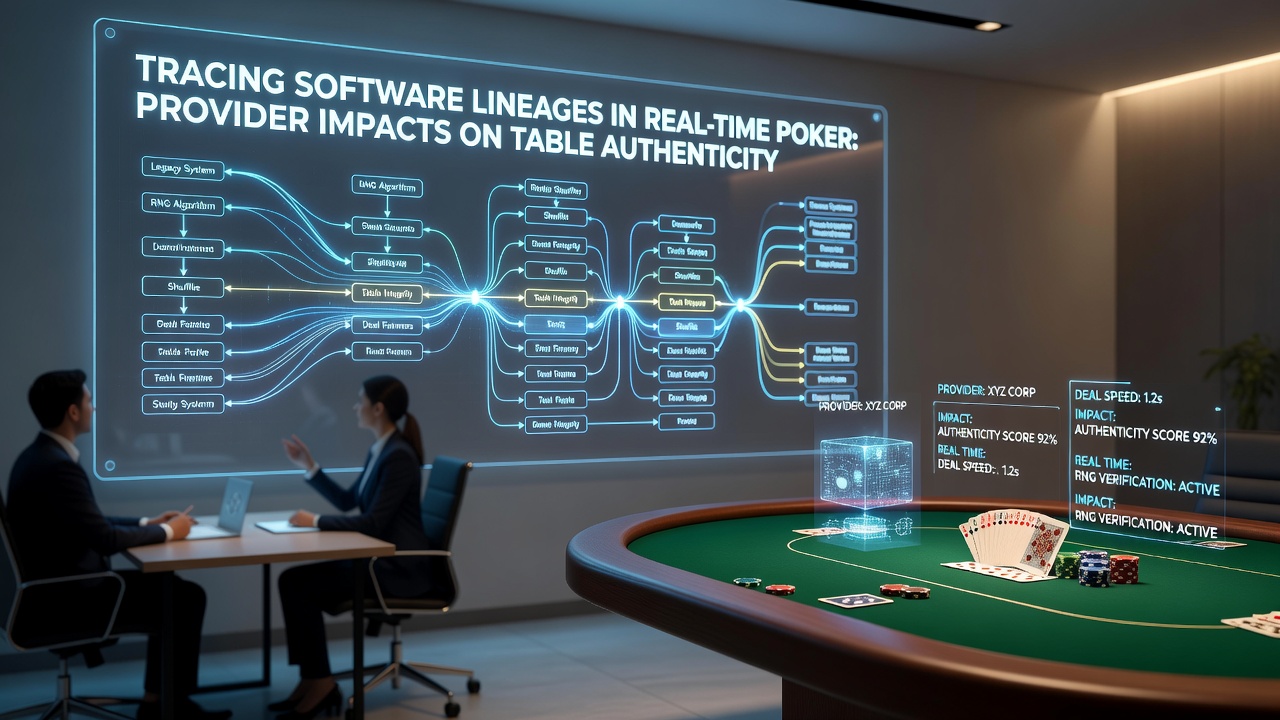
What's notable is how biometric dealer tracking systems, introduced around 2018, layered additional code on top of legacy streaming modules, and this stacking created compatibility layers that some providers optimized while others retained older handshake protocols. Research indicates that authenticity metrics, including frame consistency and random number verification, improve measurably when providers consolidate codebases rather than maintaining parallel branches.
Regulatory Oversight and Lineage Verification
Government agencies require periodic audits that trace software versions back to certified origins, and these processes expose how inherited modules affect compliance. The Australian Communications and Media Authority documented cases where legacy RNG components required re-certification after integration into live dealer environments, resulting in updated testing protocols that took effect by mid-2026. Industry associations report that verification workflows now include hash comparisons across multiple generations of code, reducing instances of unauthorized modifications that could compromise table integrity.
Observers note that providers with streamlined lineages tend to pass these audits faster because fewer legacy dependencies require separate validation, and this efficiency translates into faster deployment of security patches across live tables.
Case Examples from Provider Histories
One documented migration involved a major operator adopting a new video pipeline while retaining its original shuffle algorithm, and subsequent testing revealed that card distribution patterns remained statistically identical to prior versions despite the visual overhaul. Another instance saw a provider merge two previously separate development teams, after which reports showed reduced discrepancies in dealer timing across different geographic server clusters.
These examples demonstrate how lineage decisions influence operational consistency without altering underlying probability structures.
Conclusion
Software lineages in real-time poker continue to evolve through incremental integrations and regulatory-driven refinements, with provider choices determining the balance between innovation and preserved authenticity markers. Data collected through 2026 shows that platforms maintaining clear documentation of code heritage achieve stronger compliance outcomes and more stable table presentations, while fragmented development histories correlate with occasional synchronization challenges that require targeted remediation. Continued tracking of these patterns supports ongoing improvements in both technical performance and player experience across global networks.