The Technical Infrastructure Behind Global Real-Time Poker Systems
Written by Carlo Hughes · Jul 31, 2026

The Technical Infrastructure Behind Global Real-Time Poker Systems
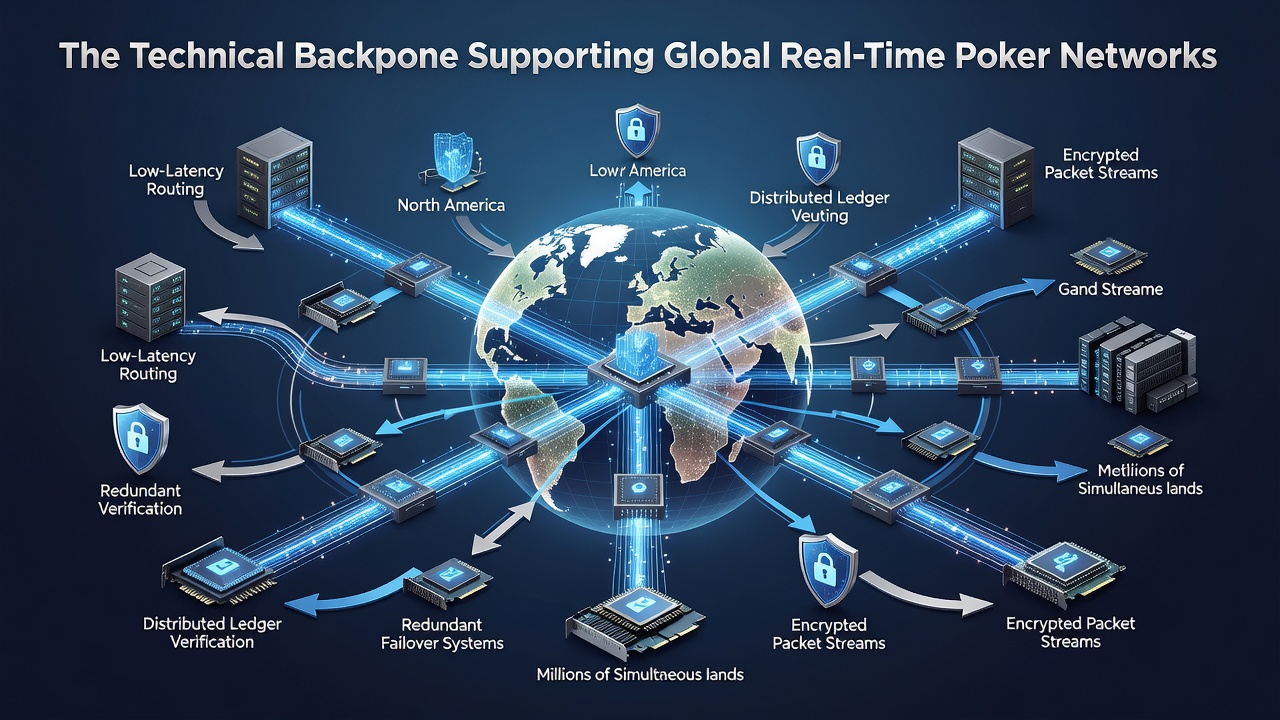
Global real-time poker networks rely on layered technology stacks that manage player connections, game state synchronization, and transaction processing across continents, and these systems handle millions of concurrent sessions without interruption. Data centers distributed in multiple regions form the foundation, with providers using content delivery networks to reduce latency below 50 milliseconds for most users. According to figures from the American Gaming Association, online poker traffic volumes reached new peaks in early 2026 as platforms expanded into additional markets.
Core Network Architecture
Operators deploy redundant fiber optic links and dedicated peering arrangements with internet service providers to maintain stable connections even during peak hours, while edge computing nodes positioned closer to players process initial hand validations before routing data to central servers. This setup prevents bottlenecks that could otherwise disrupt table integrity during high-stakes tournaments. Researchers at institutions studying distributed systems have documented how such architectures achieve uptime rates above 99.9 percent through automatic failover mechanisms.
Real-Time Synchronization Protocols
Game engines use custom protocols built on WebSocket and UDP combinations to broadcast card deals, bet updates, and player actions instantly across all connected clients, and these protocols incorporate timestamping plus sequence verification to resolve conflicts when packets arrive out of order. In July 2026 several major networks upgraded their synchronization layers to support 8K resolution streams for live dealer integrations without increasing overall bandwidth demands. The reality is that millisecond-level precision remains essential because even small delays can affect perceived fairness at the table.
Random Number Generation and Certification
Certified random number generators sit at the heart of every virtual deck shuffle, with hardware security modules generating entropy from physical sources such as thermal noise or quantum fluctuations. Independent testing laboratories audit these systems quarterly, and regulators in regions including Nevada and Malta require public disclosure of test results. Observers note that platforms must demonstrate statistical randomness across billions of simulated hands before receiving operational approval.
Security Layers and Fraud Prevention
Multi-factor authentication combines with device fingerprinting and behavioral analytics to detect account sharing or automated bots, while machine learning models flag unusual betting patterns in real time. Distributed denial-of-service mitigation services absorb volumetric attacks that have grown more frequent against gaming infrastructure. Data from industry reports indicate that successful intrusion attempts have declined steadily since 2023 as these defenses matured.
Scalability Through Cloud and Hybrid Models
Many networks operate hybrid environments where core game logic runs on private clusters while ancillary services such as chat, leaderboards, and payment gateways utilize public cloud resources. Auto-scaling groups add capacity within seconds when tournament registrations surge, and container orchestration tools keep individual tables isolated to limit the blast radius of any single component failure. Those who have examined production logs from large operators find that peak loads often occur on weekend evenings in coordinated time zones.
Regulatory Compliance and Data Residency
Jurisdictions impose strict rules on where player data may reside and how long transaction records must be retained, prompting operators to maintain region-specific databases that still communicate through encrypted tunnels. Compliance teams integrate automated reporting pipelines that feed directly into oversight portals used by authorities in Canada and Australia. The ball remains in the operators' court to demonstrate continuous adherence through third-party audits.
Future Developments in July 2026 and Beyond
Engineers continue testing 5G edge deployments that promise sub-20-millisecond response times for mobile players, and early trials show reduced packet loss compared with previous wireless generations. Integration of advanced compression algorithms allows richer telemetry without proportional increases in data usage. What's interesting is how these incremental gains compound across global player bases numbering in the tens of millions.
Conclusion
The technical backbone supporting global real-time poker networks combines specialized hardware, sophisticated software protocols, and rigorous oversight to deliver consistent experiences across borders. Continued investment in infrastructure and security measures ensures these platforms can accommodate growing demand while meeting regulatory expectations in diverse markets.