The Evolution of Interface Design in Simulating Physical Poker Dynamics Across Digital Platforms
Written by Sam Hughes · Jun 24, 2026
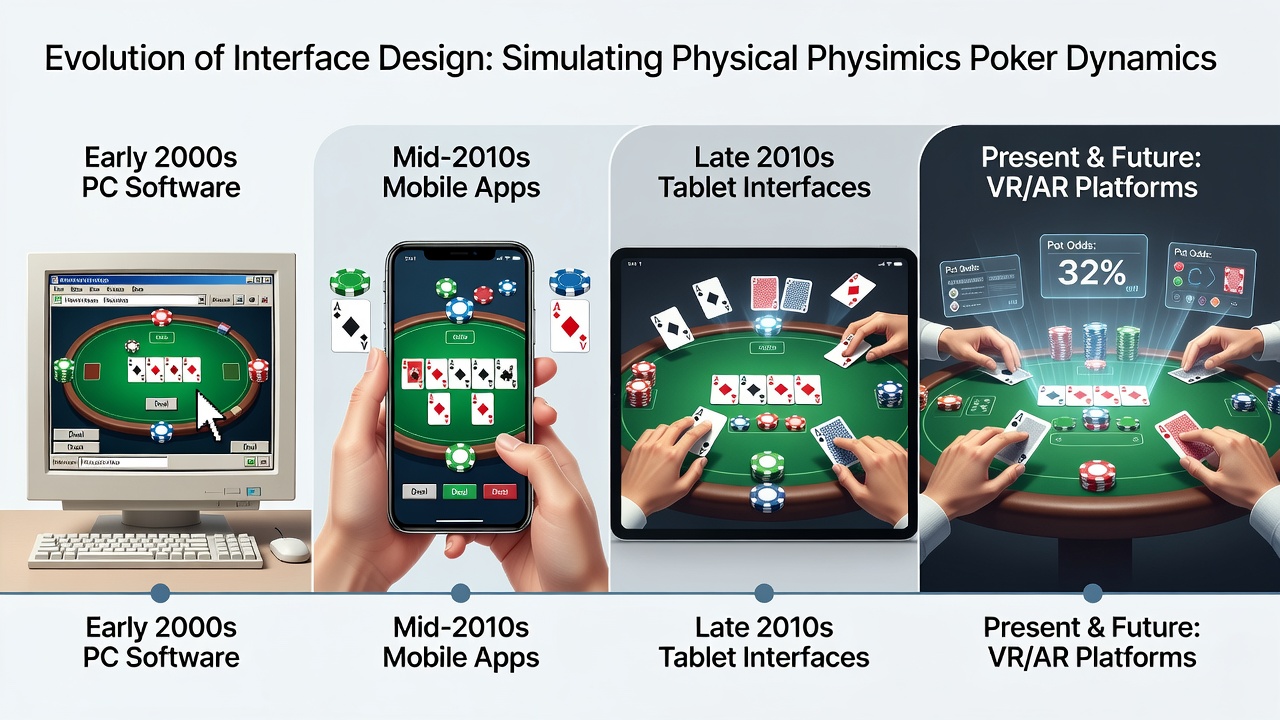
The Evolution of Interface Design in Simulating Physical Poker Dynamics Across Digital Platforms
Interface design for poker platforms has progressed from simple text commands in the 1990s to intricate systems that replicate physical table interactions, chip handling, and player gestures across multiple devices. Data from industry reports shows this shift began with early online rooms that used basic ASCII representations, then moved toward graphical elements once broadband connections became widespread in the early 2000s.
Initial Digital Representations of Table Play
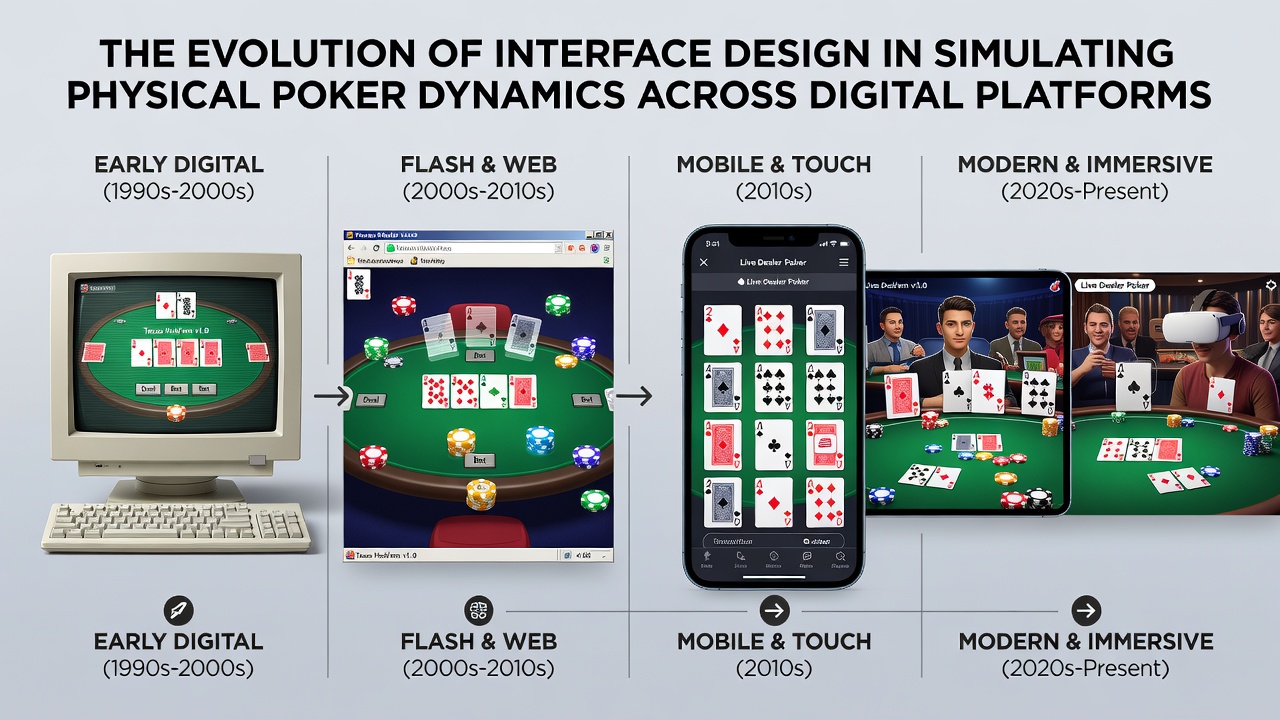
Early platforms focused on core mechanics such as card dealing and betting sequences, yet they lacked visual feedback for physical elements like stack sizes or dealer movements. Researchers at various institutions documented how these limitations affected user engagement, because players relied solely on numerical displays rather than spatial cues familiar from casino environments. By the mid-2000s several providers introduced 2D graphics that positioned cards and chips on a flat table surface, which allowed basic drag-and-drop actions to simulate physical placement.
Advancements in Visual and Interaction Layers
Three-dimensional modeling arrived next, bringing depth to table surfaces, animated card flips, and realistic lighting that mimicked felt textures under overhead lamps. Software developers incorporated physics engines to handle chip stacking and pot accumulation, drawing from principles already used in video game design. Observers note that these changes coincided with the rise of mobile applications, where touch gestures replaced mouse clicks and introduced swipe motions to match the natural action of sliding cards across a surface.
Integration of Live Dealer Elements
Live dealer streams added another dimension by combining video feeds with overlaid digital controls, enabling players to see physical shuffles and real-time hand movements while retaining interface tools for betting. According to findings from the Canadian Centre for Gaming Research, hybrid setups improved perceived authenticity because users could cross-reference on-screen prompts with actual dealer actions captured by multiple cameras. Interface adjustments included synchronized timers and chat functions positioned to avoid obscuring the video window, which maintained focus on the physical dynamics without disrupting flow.
By 2020 many platforms tested augmented overlays on mobile cameras, projecting virtual chips onto real tabletops captured through device lenses. This approach built on earlier experiments with motion sensors that tracked hand positions to replicate raises and folds more precisely than button presses alone. Figures reveal increased session durations on platforms employing these features, particularly when haptic feedback through device vibration conveyed chip weight or card contact.
Emerging Technologies and Spatial Computing
Virtual reality headsets introduced full spatial tracking that lets users reach for virtual cards and manipulate stacks with hand controllers, closely approximating physical reach and grip. Developers addressed latency issues through predictive rendering techniques that anticipate player movements, reducing teh disconnect between intention and on-screen response. In June 2026 several developers showcased updated VR modules at industry events, incorporating eye-tracking to adjust focus on distant players at the virtual table and improve social cues once limited to avatars.
Academic studies on human-computer interaction have examined how these interfaces reduce the cognitive load of translating digital actions into familiar physical ones. One project from an Australian university explored multi-user environments where synchronized gestures across remote participants created shared table states, mirroring real poker room dynamics more closely than previous chat-based systems allowed.
Design Challenges in Replicating Tactile Feedback
Reproducing the feel of physical poker remains an ongoing area of refinement because screens and controllers cannot fully convey texture, weight, or resistance. Engineers have responded with layered audio cues that change pitch based on stack height combined with variable resistance in advanced controllers. Data indicates platforms that balanced these elements saw higher retention rates, as players reported stronger connections to the simulated environment without needing constant visual confirmation of every action.
Regulatory frameworks in multiple regions require clear visual indicators for random number generation and fair dealing, which interface teams integrate directly into the display rather than hiding them in menus. This placement keeps players informed during active play while preserving the immersive qualities that define modern designs.
Conclusion
The progression of interface design continues to narrow the gap between digital poker and its physical counterpart through iterative improvements in graphics, input methods, and sensory feedback. As spatial computing and sensor technology advance further, platforms are positioned to deliver even closer approximations of table dynamics while meeting technical and regulatory standards across global markets.