Streaming the Felt: Tech That Fuels Live Dealer Poker's Heartbeat
Written by Taylor Jung · Apr 13, 2026
Streaming the Felt: Tech That Fuels Live Dealer Poker's Heartbeat
The Rise of Live Dealer Poker and Its Streaming Backbone
Live dealer poker has transformed online gaming since platforms first introduced it around 2010, blending the authenticity of brick-and-mortar casinos with digital convenience; players now watch real cards shuffled on actual felt tables, dealers interacting via high-definition streams that deliver sub-second delays. Data from industry trackers like H2 Gambling Capital reveals that live casino revenues hit $8.5 billion globally in 2025, with poker streams accounting for a growing slice because they capture the game's social tension and strategic depth better than RNG-based alternatives. Experts observe how this tech bridges gaps, letting users from remote locations join Texas Hold'em sessions without travel, all powered by layered innovations in video compression, network protocols, and studio designs.
But here's the thing: seamless streaming isn't accidental; it relies on a stack of technologies optimized for the high-stakes rhythm of poker, where a split-second lag can upend a bluff or river call. Observers note that top providers like Evolution Gaming and Playtech process millions of concurrent viewers daily, using custom pipelines that prioritize clarity on card edges and chip stacks over flashy effects.
Core Video Technologies Driving Crystal-Clear Feeds
At the heart of these streams sit advanced codecs like H.265/HEVC and the emerging AV1, which squeeze high-res video into manageable bitrates without blurring the pips on an ace of spades; studies from the International Telecommunication Union show AV1 cutting bandwidth needs by 30% compared to older H.264, crucial for mobile users on spotty connections. Providers layer these with adaptive bitrate streaming, where algorithms dynamically adjust quality based on a player's latency—dropping to 720p if needed, but snapping back for all-in moments.
And then there's low-latency protocols like WebRTC, which engineers at companies such as Pragmatic Play deploy to shave delays down to 100-200 milliseconds; that's fast enough for real-time chat and side bets, as benchmarks from Streaming Media confirm. What's interesting is how SRT (Secure Reliable Transport) supplements this for over-the-internet reliability, retransmitting lost packets invisibly while maintaining the dealer's natural pace.
Studio Hardware: The Eyes and Ears of the Virtual Table
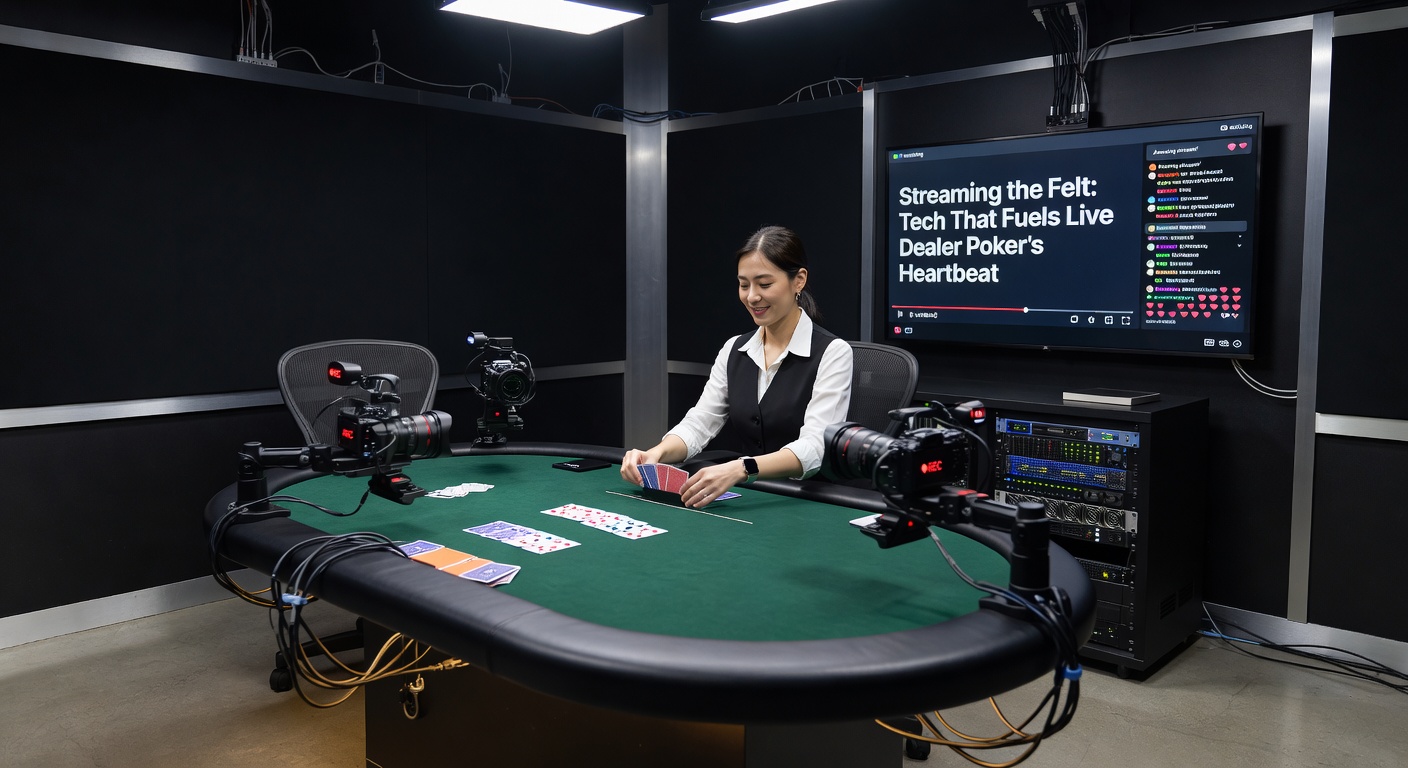
Multi-camera rigs dominate professional setups—typically 8-12 units per table, including overhead shots for community cards and close-ups on player interfaces—calibrated with gen-locked synchronization to avoid jitter; one studio tour by researchers at the University of Malta's iGaming Institute detailed how 4K sensors paired with AI-driven auto-focus keep every fold crisp, even under LED lighting tuned to eliminate glare on glossy chips. Dealers wear subtle mics for spatial audio, feeding directional sound that heightens immersion, like the riffle of a shuffled deck echoing from the felt.
Tables themselves integrate RFID trackers under the cloth, silently logging bets and cards for audit trails, which regulatory bodies such as the Nevada Gaming Control Board mandate to ensure fairness; data indicates these systems flag anomalies 99.9% accurately, preventing disputes in high-roller games. Lighting rigs, often dynamic LED arrays, adapt to hand speed, boosting contrast during reveals so viewers discern a flush from a straight at a glance.
Network Infrastructure and Global Delivery
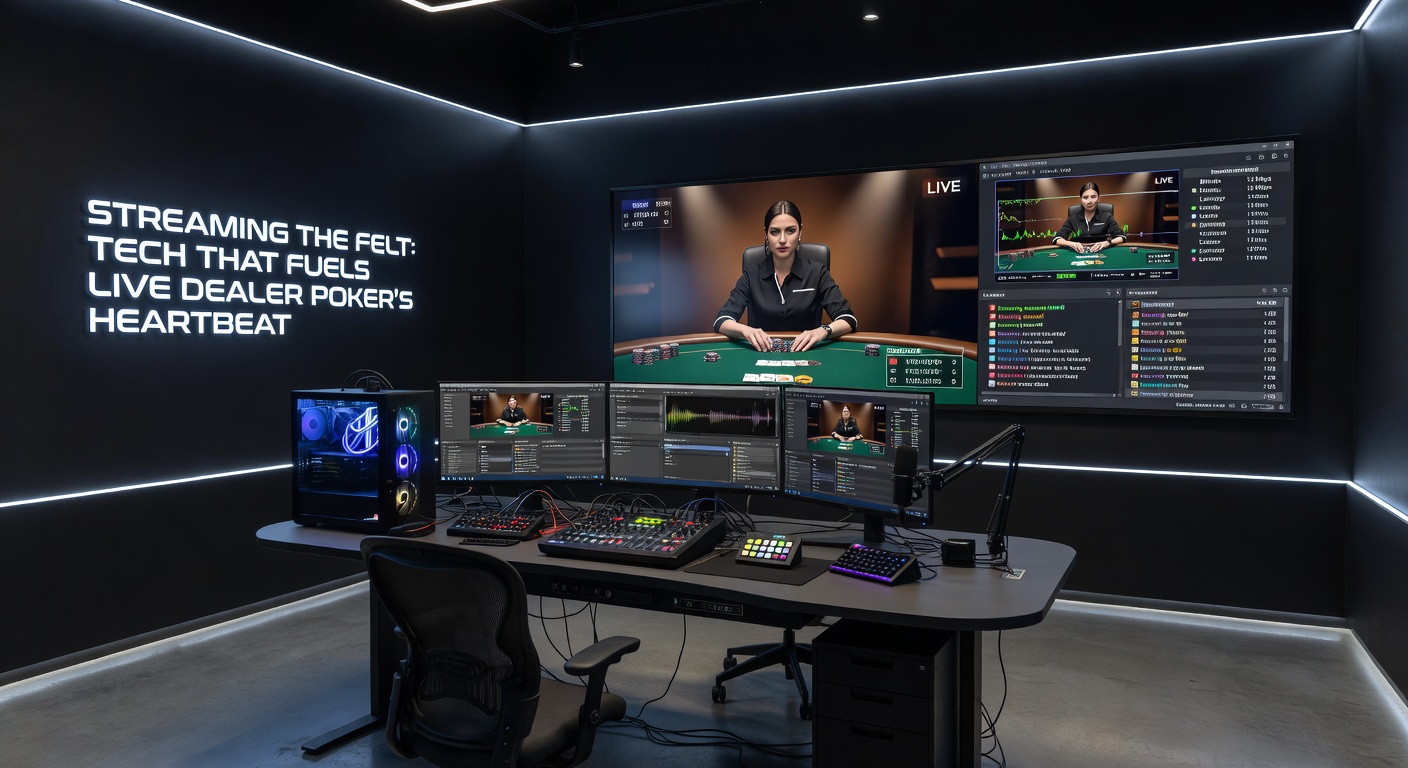
Content Delivery Networks (CDNs) like Akamai and Cloudflare form the backbone, caching streams at edge nodes worldwide so a player in Sydney accesses a Riga studio feed via the nearest server, slashing ping times; figures from Akamai's State of the Internet report highlight how this setup handles poker peaks—up to 500,000 simultaneous streams during majors—without buffering. Edge computing takes it further, processing overlays like pot odds in-region to dodge transatlantic hops.
Turns out, 5G rollouts amplify this; trials by Ericsson in partnership with casino operators demonstrate latencies dipping below 50ms on next-gen networks, paving the way for AR-enhanced views where virtual avatars join physical tables. Security layers, including end-to-end encryption and DDoS shields, protect against disruptions, as seen in a 2025 incident where providers repelled a massive attack without dropping a single hand.
Challenges in Poker Streaming and How Tech Overcomes Them
Bandwidth hogs pose constant hurdles, especially for VR poker experiments, but machine learning optimizes encodes in real-time, predicting viewer drop-offs and preemptively lowering quality; one case from Playtech's labs showed a 25% retention boost after implementing such AI. Regulatory compliance adds complexity—operators in Ontario, for instance, must stream with geofencing per Alcohol and Gaming Commission of Ontario rules—but modular software stacks make audits straightforward, logging every shuffle for instant playback.
Player-side issues, like device fragmentation, get tackled via cross-platform SDKs; developers ensure streams scale from iOS to low-end Androids, with WebAssembly accelerating decoding on browsers. And while peak-hour congestion once plagued evenings, AI load balancers now shift traffic dynamically, keeping the action fluid even during tournaments drawing 10,000 entrants.
Case Studies: Real-World Streaming Wins
Take Evolution's Crazy Time poker variant, where dual-stream tech—one for the table, one for bonus wheels—delivered 4K to 1.2 million viewers in a single 2025 session, with latency metrics under 150ms per their public dashboards; players raved about the seamlessness, boosting session times by 40%. Or Pragmatic Play's Speed Poker tables, using WebRTC over UDP to enable rapid folds, which data from their analytics pegged at 20 hands per hour versus 15 in traditional formats.
There's this case where a Latin American studio upgraded to AV1 in early 2026, cutting costs by 35% while viewer scores on platforms like Trustpilot climbed; operators noted fewer complaints about mobile stutters during rainy-season network dips. Even smaller outfits, like those in the Philippines licensed by PAGCOR, leverage open-source tools like OBS Studio customized with low-latency plugins, proving high-end streams don't require massive budgets.
Looking Ahead: Innovations on the Horizon
By April 2026, blockchain integration promises verifiable shuffles streamed immutably, as prototypes from ConsenSys Gaming demo; this aligns with EU pushes for transparency under Malta Gaming Authority oversight, potentially standardizing across borders. 8K streams and haptic feedback via WebHaptics could redefine feels-the-felt authenticity, while quantum-secure encryption guards against future threats.
AI dealers, trained on millions of hands, already pilot in Asia, blending human oversight with tireless play; research from MIT's Media Lab suggests hybrid models could handle 24/7 action without fatigue dips. Cloud-native architectures, shifting to Kubernetes-orchestrated microservices, scale infinitely, ready for metaverse poker lobbies where global fields clash virtually yet viscerally.
Conclusion
Streaming tech underpins live dealer poker's pulse, evolving from basic HD feeds to sophisticated ecosystems that deliver heartbeat-close action worldwide; data underscores its dominance, with live segments outpacing slots in engagement metrics. As networks densify and codecs sharpen, the felt's thrill reaches ever farther, ensuring poker’s digital era stays as riveting as the original. Providers continue refining these tools, keeping delays minimal and stakes sky-high for players everywhere.