Poker Table Dynamics: Software Features That Mimic Physical Casino Atmospheres
Written by Sam Hughes · Jul 13, 2026
Poker Table Dynamics: Software Features That Mimic Physical Casino Atmospheres
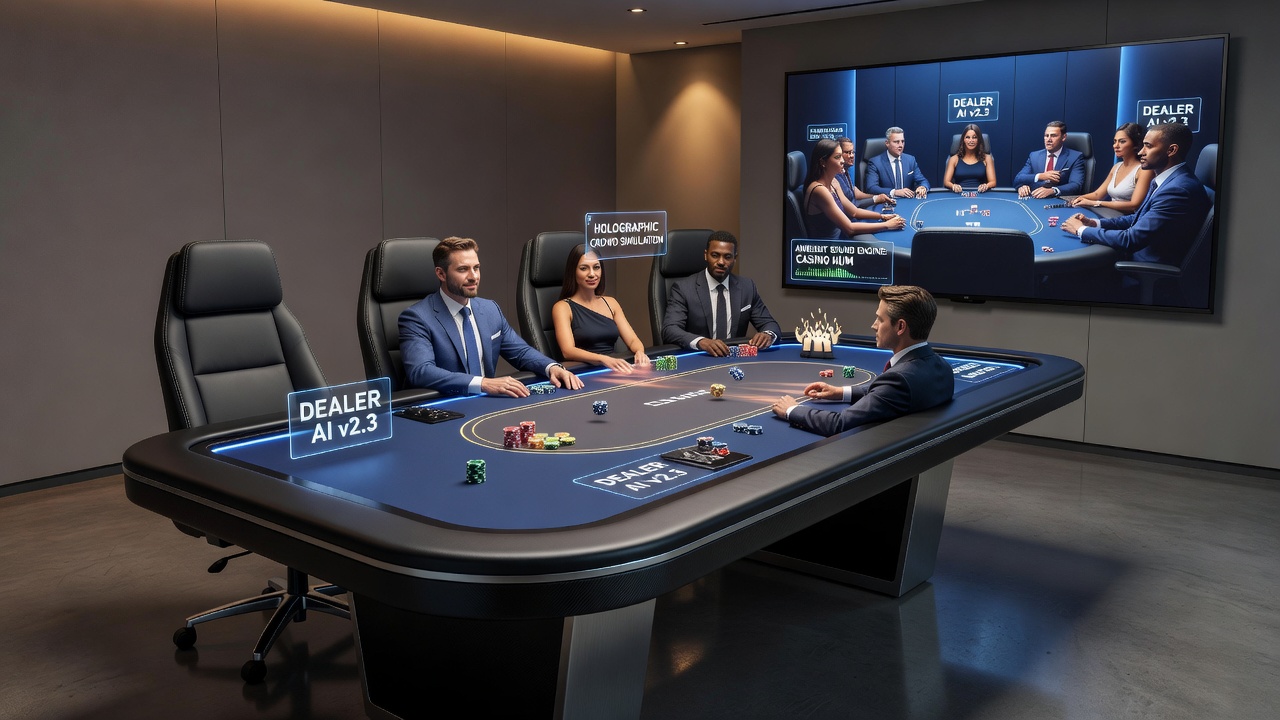
Software developers have spent years refining digital environments to capture the essence of physical poker rooms, and by July 2026 several platforms incorporate layered elements that replicate everything from felt textures to background chatter. These systems rely on advanced rendering engines alongside physics calculations that govern how cards slide across virtual surfaces and how stacks of chips respond to player actions.
Visual Rendering and Environmental Details
High-definition graphics engines create table surfaces with subtle weave patterns and lighting that shifts based on virtual overhead fixtures, while multiple camera angles allow observers to switch between overhead views and close-ups that mirror what a player might see when leaning forward in a live setting. Developers integrate particle effects for smoke or ambient dust motes that drift across the screen during extended sessions, and seat positioning algorithms ensure avatars maintain realistic spacing around the table perimeter.
Color calibration tools adjust hues to match specific casino branding standards, so a table modeled after a Las Vegas property displays the same green felt tone used in its physical counterpart. Research from the University of Nevada, Las Vegas Center for Gaming Research indicates that consistent visual fidelity improves user retention metrics across simulated environments.
Audio Layers and Ambient Simulation
Sound design teams record actual casino recordings then layer them with positional audio so chips clinking on one side of the table register differently than those on the opposite edge. Dealer voices incorporate slight regional accents and breathing patterns that change during high-stakes moments, while background tracks include muffled conversations from adjacent tables and the occasional ring of slot machines in a distant corner.
Dynamic volume scaling responds to the number of active players, increasing crowd murmurs as more avatars join a hand. These audio profiles update in real time based on game pace, creating a feedback loop that feels responsive rather than looped on repeat.
Physics Engines and Interaction Mechanics
Modern poker clients employ rigid-body physics systems that calculate card trajectories, bounce angles, and stacking behaviors with measurable precision. When a player drags chips forward, the software applies friction coefficients calibrated from real felt samples, resulting in stacks that settle naturally instead of snapping into place. Card-shuffling algorithms generate sequences that avoid predictable patterns, and dealing animations include micro-delays that replicate the time a live dealer takes to distribute cards evenly.
Collision detection prevents overlapping objects during multi-player actions, so one avatar’s chip push does not intersect with another’s cards mid-animation. Data compiled through the New Jersey Division of Gaming Enforcement shows that platforms using verified physics modules report lower dispute rates related to interface behavior.
Social and Behavioral Cues
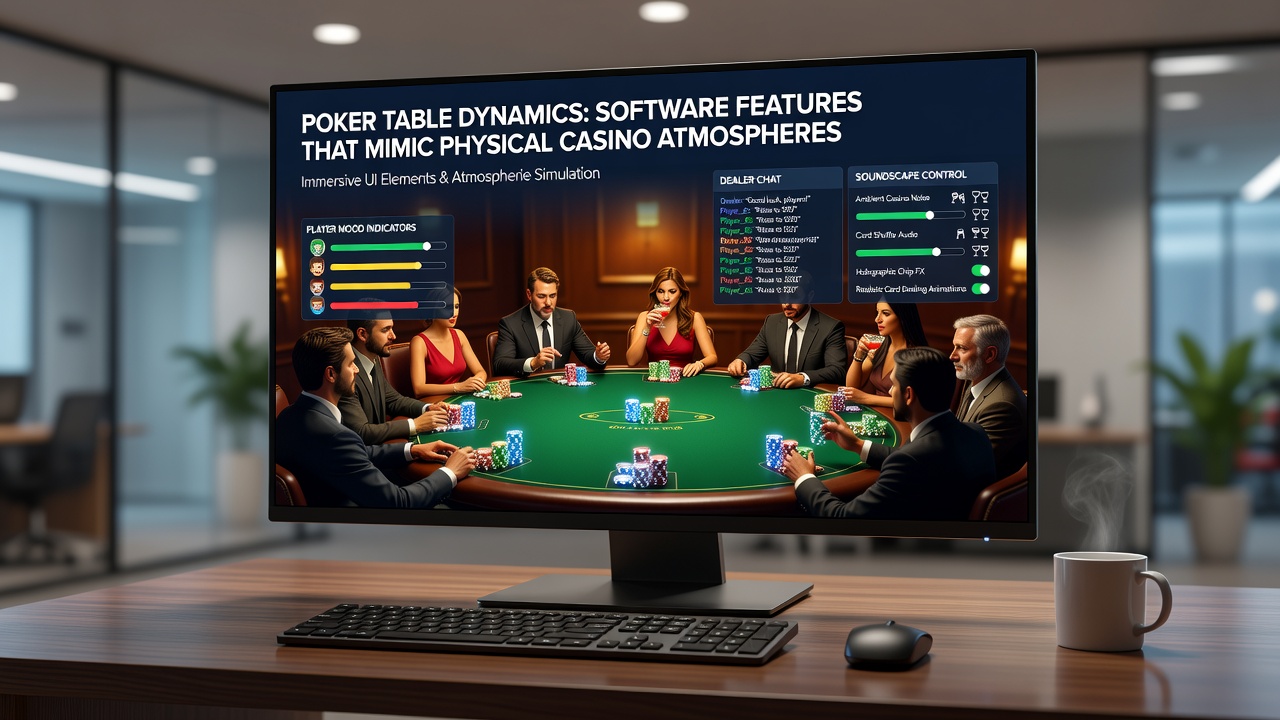
Avatar customization extends beyond appearance to include posture shifts, eye movement, and timing tells that echo live-player mannerisms. Chat systems filter phrases to maintain table etiquette while preserving spontaneous reactions, and gesture libraries let participants signal folds or raises through animated hand movements rather than text alone. Observers note that these non-verbal cues help recreate the psychological tension present in brick-and-mortar rooms without requiring physical presence.
Seat-change requests and dealer-tip animations follow protocols modeled directly on casino floor procedures, and waiting-list timers display estimated durations drawn from aggregated session data across multiple properties. These features operate within regulatory frameworks that require transparent randomization and audit trails for every simulated action.
Lighting, Camera, and Atmosphere Controls
Dynamic lighting models adjust shadow length and intensity according to the time of day selected by the user or synchronized with real-world schedules. Some interfaces offer “table cam” modes that introduce slight handheld shake to simulate a spectator filming on a phone, while others provide fixed broadcast angles reminiscent of televised tournaments. Color temperature shifts during evening hours create warmer tones that match the ambiance of dimmed casino chandeliers.
Particle systems handle confetti bursts during tournament wins and subtle ember effects near virtual ashtrays, all calibrated to remain unobtrusive during active play. These atmospheric additions integrate with core gameplay loops so they enhance rather than distract from decision-making sequences.
Conclusion
Software platforms continue to refine the intersection of visual fidelity, physics accuracy, and social signaling to produce digital tables that parallel their physical predecessors. As of July 2026, the combination of verified rendering pipelines, positional audio, and regulatory-compliant mechanics allows participants to experience many of the same environmental cues found in traditional casino settings while operating entirely within online frameworks.