Optimizing Server Setups for Reliable Multiplayer Card Game Performance at Scale
Written by Yara Simon · Aug 5, 2026
Optimizing Server Setups for Reliable Multiplayer Card Game Performance at Scale
Multiplayer card sessions demand consistent low-latency connections and synchronized state across thousands of concurrent users, and server architecture choices determine whether systems hold steady when traffic spikes occur. Data centers handling these workloads rely on combinations of horizontal scaling, distributed databases, and real-time communication protocols that together prevent session drops and maintain game integrity during peak periods.
Core Challenges in High-Volume Card Gaming Environments
Heavy load emerges when player counts surge simultaneously across regions, which creates pressure on CPU, memory, and network layers that must process card draws, bets, and chat messages without delay. Research indicates that even brief inconsistencies in state synchronization lead to player disconnections, while studies from distributed systems labs show that traditional single-server models fail once concurrent sessions exceed a few thousand. Observers note that card games add unique requirements because every action updates a shared deck state that all participants must see identically and instantly.
Horizontal Scaling and Container Orchestration
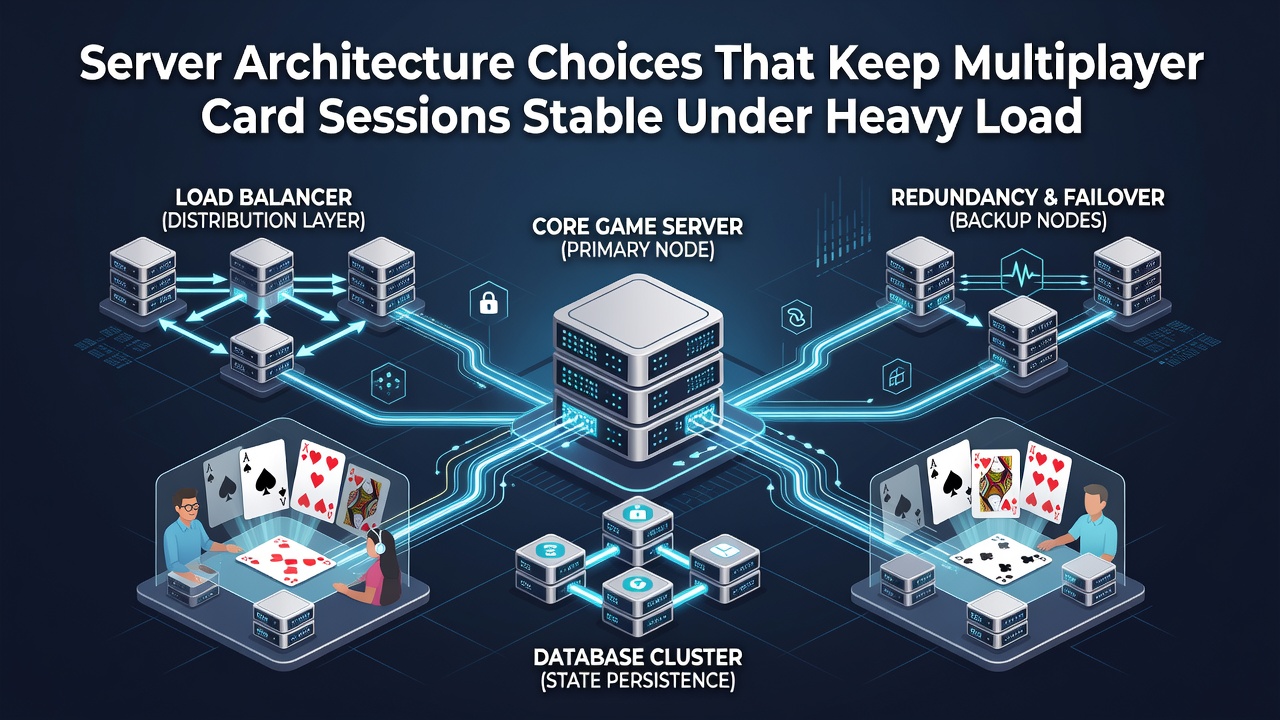
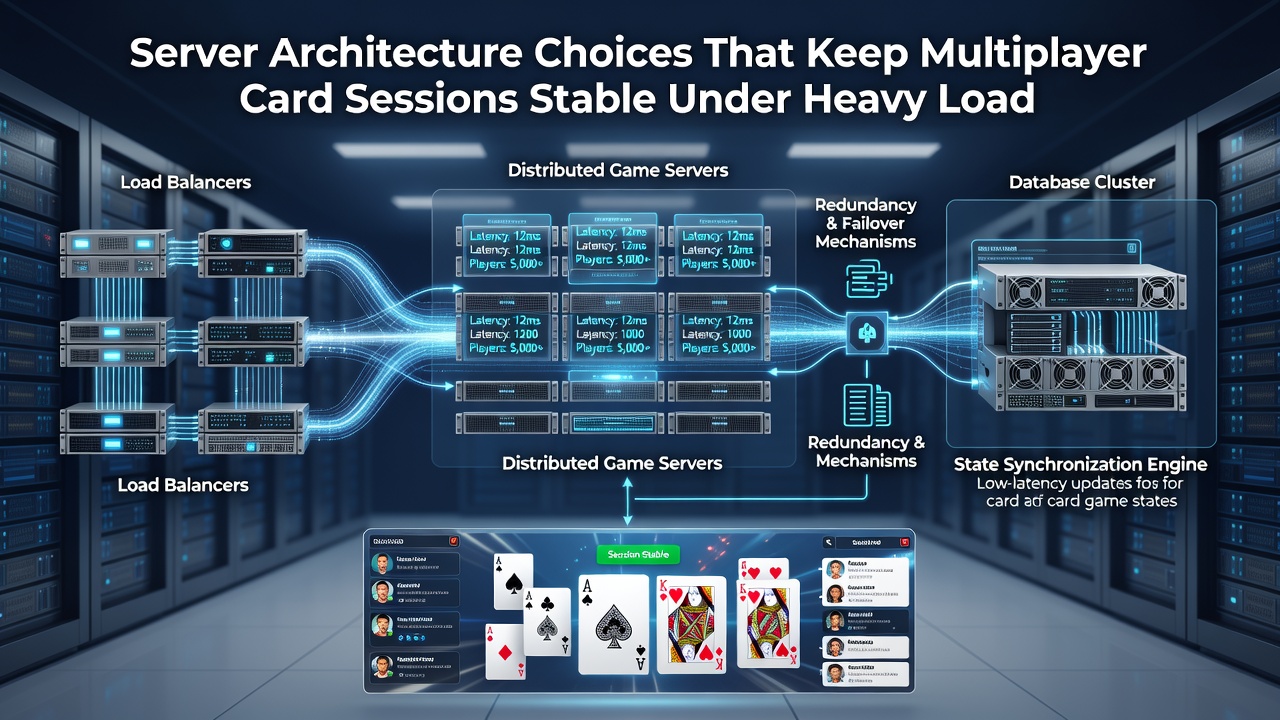
Engineers deploy container orchestration platforms such as Kubernetes to spin up additional game servers automatically when metrics detect rising player queues. These clusters distribute sessions across nodes located in multiple availability zones, and load balancers route incoming WebSocket connections to the least utilized instance. Figures from cloud providers reveal that this approach sustains millions of simultaneous sessions by adding capacity within seconds rather than requiring manual hardware upgrades. Sessions remain stable because each container holds only the state for its assigned tables while a central coordination service manages player matchmaking and table transitions.
Database and State Management Approaches
Relational databases handle persistent player accounts and transaction logs, yet real-time card state often moves to in-memory stores like Redis clusters that replicate across regions for fault tolerance. Sharding strategies split player data and active tables by geographic region or table ID, which reduces query contention when thousands of updates arrive per second. Academic papers on distributed databases demonstrate that eventual consistency models work for non-critical elements such as chat logs while strict consistency remains reserved for wager amounts and final hand results.
Real-Time Communication Layers
WebSocket connections replace polling methods because they keep open channels that push updates the moment a card is played or a bet is placed. Message brokers such as Apache Kafka or RabbitMQ queue events so that no single server becomes overwhelmed during sudden influxes of activity. Network engineers configure these brokers with topic partitioning that matches table IDs, allowing parallel processing without message ordering conflicts. Data collected during August 2026 traffic events showed that systems using partitioned brokers maintained sub-50-millisecond median latency even when concurrent connections doubled typical daily peaks.
Edge Computing and Regional Distribution
Placing game logic servers closer to players through edge nodes cuts round-trip times and reduces the impact of transcontinental routing delays. Content delivery networks extended with compute capabilities now host lightweight session handlers that forward only essential state changes to central clusters. Regulatory reports from agencies in Australia and Canada highlight that regional distribution also supports compliance with data residency rules while improving session continuity during localized network congestion.
Monitoring, Failover, and Capacity Planning
Continuous monitoring of CPU utilization, memory pressure, and message queue depth triggers automated scaling policies before users experience lag. Failover mechanisms replicate active sessions to standby nodes so that hardware faults result in seamless handoffs rather than dropped connections. Capacity models based on historical peak patterns allow operators to provision buffer resources ahead of scheduled events that traditionally drive higher engagement.
Conclusion
Server architecture decisions centered on orchestration, in-memory state handling, partitioned messaging, and regional distribution enable multiplayer card sessions to remain stable when load intensifies. Organizations that combine these elements report fewer interruptions and more consistent performance across varying traffic conditions, and ongoing refinements in these areas continue to support growing player bases without compromising responsiveness.