Inside the Backend Systems Enabling Fluid Shifts Between Digital and Live Poker Variants
Written by Sam Hughes · Jul 6, 2026
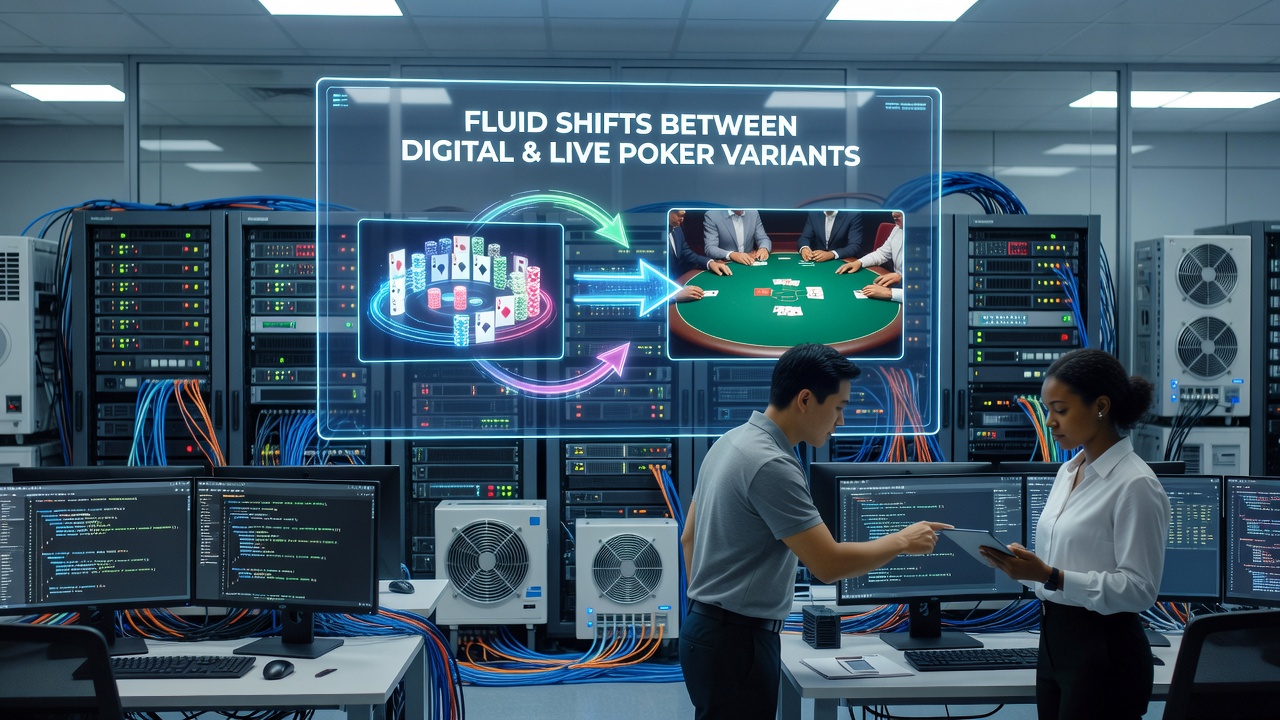
Backend Systems Facilitating Transitions Between Digital and Live Poker Platforms
Backend infrastructure in poker platforms manages the movement of player sessions across digital RNG-based games and live dealer environments through synchronized databases, real-time APIs, and state management protocols. These systems track account balances, hand histories, and session metadata in unified repositories that update across formats without requiring separate logins or manual transfers. Core components include distributed ledger-style transaction processors that record every action in milliseconds, while middleware layers handle format-specific rules such as RNG seed generation versus physical card scanning integration. When a player initiates a shift, the backend validates eligibility through geolocation checks and compliance flags before routing the session to the appropriate server cluster. Data synchronization relies on event-driven architectures where changes in one variant trigger immediate propagation to others via message queues. This setup supports hybrid tables where digital players join live streams, with backend reconciliation engines matching virtual actions to physical outcomes captured through optical recognition systems. In July 2026 several operators deployed enhanced edge computing nodes that reduced latency during these transitions to under 150 milliseconds on average, according to performance metrics shared in industry technical briefings. Such nodes sit closer to regional data centers and cache player profiles locally while maintaining a central authority database for audit trails. Security layers incorporate multi-factor authentication tokens that persist across both digital and live sessions, alongside encrypted channels for all data exchanges. Regulatory frameworks in various jurisdictions require these measures, with operators logging every state change to satisfy reporting obligations from bodies like the New Jersey Division of Gaming Enforcement. Player identity management uses centralized profile services that link RNG game statistics to live table participation records. These services pull data from multiple sources including payment gateways and loyalty programs, then feed aggregated insights back into recommendation engines that suggest format switches based on historical patterns. Observers note that scalability challenges arise during peak hours when thousands of concurrent sessions demand simultaneous format transitions. Load balancers distribute requests across redundant server farms, while failover mechanisms reroute traffic if any node experiences disruption. Take one documented case where experts at a major European operator integrated WebSocket connections for live video feeds with RESTful endpoints for digital gameplay. The result allowed players to pause a digital tournament hand, enter a live cash game, and resume the original session later with all prior actions preserved in the shared backend. Additional elements involve anti-collusion modules that cross-reference player behaviors across formats using machine learning models trained on transaction and timing data. These models flag anomalies without interrupting active sessions, instead queuing alerts for compliance teams. 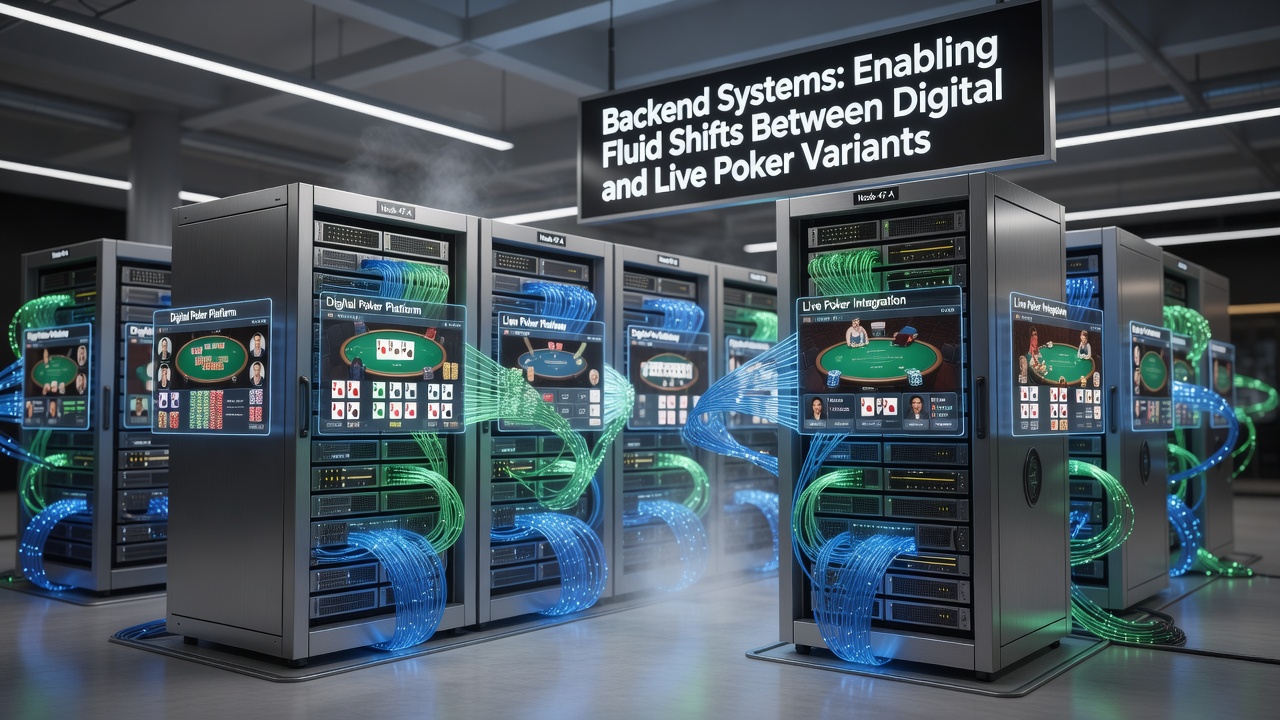 API gateways serve as the entry point for client applications, authenticating requests and routing them to either digital game engines or live dealer orchestration services. Rate limiting and throttling prevent abuse while ensuring equitable access during high-demand periods. Database schemas employ relational and NoSQL hybrids to store structured hand data alongside unstructured video metadata from live tables. Queries optimized for cross-format joins enable rapid retrieval of a player's complete activity log when shifting occurs. Research from academic institutions such as the University of Nevada's gaming technology programs has examined how these architectures maintain integrity when physical randomness sources interface with algorithmic ones. Findings indicate that timestamp synchronization and cryptographic hashing reduce discrepancies to negligible levels in controlled tests. Payment processing subsystems remain format-agnostic, settling wins and losses through the same wallet infrastructure regardless of whether the action originated from digital RNG tables or live dealer environments. This consolidation simplifies reconciliation for operators and satisfies audit requirements imposed by regional authorities including those in Australia and Canada. Monitoring dashboards aggregate metrics from all backend services, displaying transition success rates, average session durations per format, and error frequencies. Automated alerts notify engineering teams when thresholds indicate potential bottlenecks in the synchronization pipeline. Developers implement feature flags that allow gradual rollout of new transition capabilities, testing them against subsets of traffic before full deployment. Version control systems track changes to the core state management code, ensuring rollback options remain available if issues surface post-launch. Those who've studied these platforms point to the role of container orchestration tools like Kubernetes in maintaining consistent environments across development, staging, and production clusters. Such tools facilitate quick scaling when live events drive sudden spikes in hybrid format usage. Conclusion
The backend frameworks supporting fluid movement between digital and live poker variants combine real-time data handling, robust security protocols, and scalable infrastructure to deliver uninterrupted player experiences. Ongoing refinements in edge computing and synchronization techniques continue to shape how these systems operate across global markets.
API gateways serve as the entry point for client applications, authenticating requests and routing them to either digital game engines or live dealer orchestration services. Rate limiting and throttling prevent abuse while ensuring equitable access during high-demand periods. Database schemas employ relational and NoSQL hybrids to store structured hand data alongside unstructured video metadata from live tables. Queries optimized for cross-format joins enable rapid retrieval of a player's complete activity log when shifting occurs. Research from academic institutions such as the University of Nevada's gaming technology programs has examined how these architectures maintain integrity when physical randomness sources interface with algorithmic ones. Findings indicate that timestamp synchronization and cryptographic hashing reduce discrepancies to negligible levels in controlled tests. Payment processing subsystems remain format-agnostic, settling wins and losses through the same wallet infrastructure regardless of whether the action originated from digital RNG tables or live dealer environments. This consolidation simplifies reconciliation for operators and satisfies audit requirements imposed by regional authorities including those in Australia and Canada. Monitoring dashboards aggregate metrics from all backend services, displaying transition success rates, average session durations per format, and error frequencies. Automated alerts notify engineering teams when thresholds indicate potential bottlenecks in the synchronization pipeline. Developers implement feature flags that allow gradual rollout of new transition capabilities, testing them against subsets of traffic before full deployment. Version control systems track changes to the core state management code, ensuring rollback options remain available if issues surface post-launch. Those who've studied these platforms point to the role of container orchestration tools like Kubernetes in maintaining consistent environments across development, staging, and production clusters. Such tools facilitate quick scaling when live events drive sudden spikes in hybrid format usage. Conclusion
The backend frameworks supporting fluid movement between digital and live poker variants combine real-time data handling, robust security protocols, and scalable infrastructure to deliver uninterrupted player experiences. Ongoing refinements in edge computing and synchronization techniques continue to shape how these systems operate across global markets.
Backend infrastructure in poker platforms manages the movement of player sessions across digital RNG-based games and live dealer environments through synchronized databases, real-time APIs, and state management protocols. These systems track account balances, hand histories, and session metadata in unified repositories that update across formats without requiring separate logins or manual transfers. Core components include distributed ledger-style transaction processors that record every action in milliseconds, while middleware layers handle format-specific rules such as RNG seed generation versus physical card scanning integration. When a player initiates a shift, the backend validates eligibility through geolocation checks and compliance flags before routing the session to the appropriate server cluster. Data synchronization relies on event-driven architectures where changes in one variant trigger immediate propagation to others via message queues. This setup supports hybrid tables where digital players join live streams, with backend reconciliation engines matching virtual actions to physical outcomes captured through optical recognition systems. In July 2026 several operators deployed enhanced edge computing nodes that reduced latency during these transitions to under 150 milliseconds on average, according to performance metrics shared in industry technical briefings. Such nodes sit closer to regional data centers and cache player profiles locally while maintaining a central authority database for audit trails. Security layers incorporate multi-factor authentication tokens that persist across both digital and live sessions, alongside encrypted channels for all data exchanges. Regulatory frameworks in various jurisdictions require these measures, with operators logging every state change to satisfy reporting obligations from bodies like the New Jersey Division of Gaming Enforcement. Player identity management uses centralized profile services that link RNG game statistics to live table participation records. These services pull data from multiple sources including payment gateways and loyalty programs, then feed aggregated insights back into recommendation engines that suggest format switches based on historical patterns. Observers note that scalability challenges arise during peak hours when thousands of concurrent sessions demand simultaneous format transitions. Load balancers distribute requests across redundant server farms, while failover mechanisms reroute traffic if any node experiences disruption. Take one documented case where experts at a major European operator integrated WebSocket connections for live video feeds with RESTful endpoints for digital gameplay. The result allowed players to pause a digital tournament hand, enter a live cash game, and resume the original session later with all prior actions preserved in the shared backend. Additional elements involve anti-collusion modules that cross-reference player behaviors across formats using machine learning models trained on transaction and timing data. These models flag anomalies without interrupting active sessions, instead queuing alerts for compliance teams.
API gateways serve as the entry point for client applications, authenticating requests and routing them to either digital game engines or live dealer orchestration services. Rate limiting and throttling prevent abuse while ensuring equitable access during high-demand periods. Database schemas employ relational and NoSQL hybrids to store structured hand data alongside unstructured video metadata from live tables. Queries optimized for cross-format joins enable rapid retrieval of a player's complete activity log when shifting occurs. Research from academic institutions such as the University of Nevada's gaming technology programs has examined how these architectures maintain integrity when physical randomness sources interface with algorithmic ones. Findings indicate that timestamp synchronization and cryptographic hashing reduce discrepancies to negligible levels in controlled tests. Payment processing subsystems remain format-agnostic, settling wins and losses through the same wallet infrastructure regardless of whether the action originated from digital RNG tables or live dealer environments. This consolidation simplifies reconciliation for operators and satisfies audit requirements imposed by regional authorities including those in Australia and Canada. Monitoring dashboards aggregate metrics from all backend services, displaying transition success rates, average session durations per format, and error frequencies. Automated alerts notify engineering teams when thresholds indicate potential bottlenecks in the synchronization pipeline. Developers implement feature flags that allow gradual rollout of new transition capabilities, testing them against subsets of traffic before full deployment. Version control systems track changes to the core state management code, ensuring rollback options remain available if issues surface post-launch. Those who've studied these platforms point to the role of container orchestration tools like Kubernetes in maintaining consistent environments across development, staging, and production clusters. Such tools facilitate quick scaling when live events drive sudden spikes in hybrid format usage. Conclusion
The backend frameworks supporting fluid movement between digital and live poker variants combine real-time data handling, robust security protocols, and scalable infrastructure to deliver uninterrupted player experiences. Ongoing refinements in edge computing and synchronization techniques continue to shape how these systems operate across global markets.