Distributed Ledger Systems Confirming Card Shuffle Fairness Across Virtual Poker Platforms
Written by Anna Schmidt · Jun 8, 2026

Distributed Ledger Systems Confirming Card Shuffle Fairness Across Virtual Poker Platforms
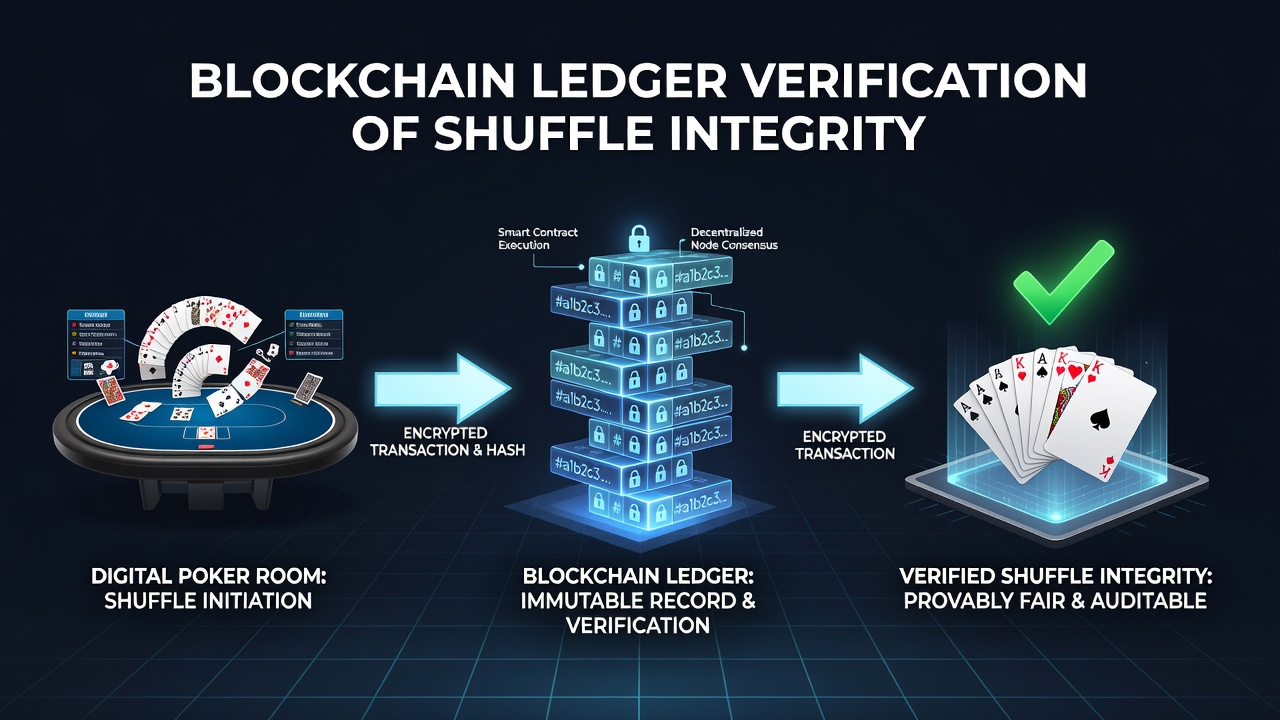
Digital poker platforms have long faced scrutiny over the fairness of their card shuffling algorithms, yet blockchain technology now offers verifiable methods that allow independent confirmation of each shuffle's integrity without relying solely on operator assurances. These systems record every step of the randomization process on an immutable ledger, where cryptographic hashes and timestamped entries create an auditable trail that participants can check at any time.
Traditional Challenges in Online Card Randomization
Centralized servers once handled all randomization tasks through proprietary algorithms that remained hidden from players and regulators alike, which created opportunities for undetected manipulation in some documented cases. Observers note that early online poker sites occasionally faced allegations of biased shuffles, prompting the industry to seek more transparent solutions as regulatory pressure mounted from bodies such as the Nevada Gaming Control Board and the Australian Communications and Media Authority.
Software providers responded by adopting certified random number generators audited by third parties, although these certifications still required players to trust external reviewers rather than verify outcomes themselves. Data from industry reports shows that by 2024 most major platforms had implemented at least basic provably fair elements, yet full ledger integration remained limited until distributed systems matured further.
Core Mechanisms of Blockchain-Based Verification
Blockchain ledgers function by storing sequential blocks of data linked through cryptographic hashes, so any alteration to a previous entry would immediately break the chain and become detectable by all network participants. In poker applications this structure captures the initial deck state, the seed values used for shuffling, and the resulting card order as separate but connected transactions.
Smart contracts execute the shuffle logic automatically once players commit their cryptographic commitments to the ledger, eliminating manual intervention while ensuring the process follows predetermined rules visible to everyone. Researchers at institutions like the University of Nevada, Las Vegas have examined how these contracts can incorporate multiple player-provided seeds alongside the house seed, thereby distributing control and reducing single-point vulnerabilities.
Implementation Steps in Modern Poker Rooms
Platforms begin by generating a hashed representation of the unshuffled deck before any game starts, then publish this hash publicly on the blockchain for later comparison. Players receive encrypted commitments that they can open after the hand concludes, allowing them to reconstruct and verify the exact sequence against the original ledger entry.
During June 2026 several operators expanded these systems to include real-time cross-checks against multiple node validators spread across different jurisdictions, which added an extra layer of geographic redundancy. This approach draws from established practices documented in reports issued by the European Gaming and Betting Association, where multi-node consensus helps confirm that no single party altered the shuffle mid-process.
Player Access and Independent Auditing Tools
Most implementations provide users with simple verification interfaces that let them input transaction identifiers and retrieve the complete shuffle history without needing advanced technical skills. These tools compare the final card order against the committed seeds and hashes stored on the ledger, flagging any discrepancies automatically.
Independent auditors and academic groups can run teh same checks on the public blockchain data, creating ongoing oversight that supplements traditional licensing requirements. Figures from a 2025 study conducted by the Canadian Gaming Association reveal that platforms employing full ledger verification experienced a measurable drop in player disputes related to hand outcomes compared with earlier centralized models.
Regulatory Considerations and Future Developments
Regulators in multiple regions now examine how blockchain records can serve as primary evidence during compliance reviews, since the immutable nature of the ledger reduces the risk of post-event data tampering. Jurisdictions including those overseen by the New Jersey Division of Gaming Enforcement have begun requiring operators to maintain accessible ledger endpoints for routine inspections.
Technical standards continue to evolve as developers integrate zero-knowledge proofs that allow verification without revealing sensitive seed information to all participants. These advancements build on foundational research published by various university computer science departments, which demonstrate practical methods for scaling such systems to handle thousands of concurrent tables efficiently.
Conclusion
Blockchain ledgers have established a verifiable framework for confirming shuffle integrity in digital poker rooms through cryptographic chaining, distributed consensus, and player-accessible audit trails. As adoption expands and regulatory frameworks adapt, these systems provide an objective record that supports both operational transparency and independent validation across global platforms.