Backend Infrastructure Powering Instant Updates Across Virtual Card Sessions
Written by Sam Hughes · Jun 17, 2026
Backend Infrastructure Powering Instant Updates Across Virtual Card Sessions
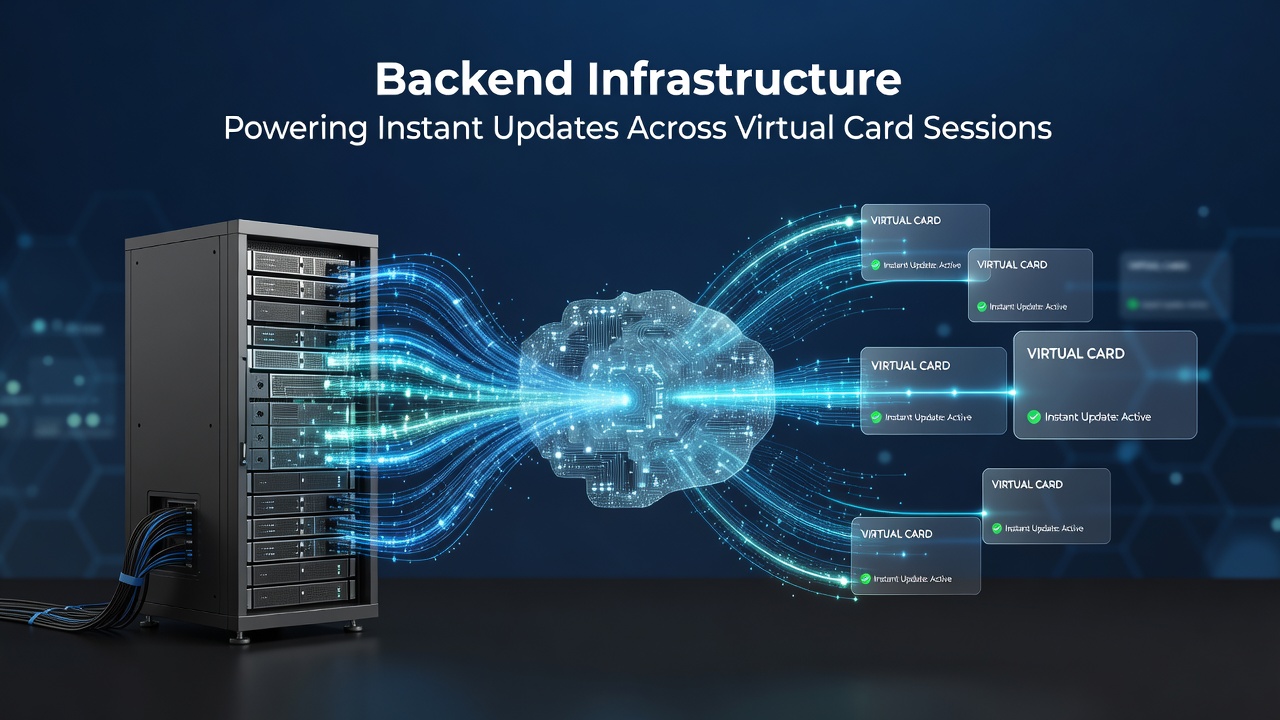
Virtual card sessions rely on backend infrastructure that synchronizes data across distributed systems in milliseconds, allowing balances, transaction states, and authorization tokens to reflect changes without noticeable delay for end users. Observers note that these systems combine event-driven architectures with in-memory databases and message queues to handle concurrent requests while maintaining consistency across multiple regions.
Core Components of Real-Time Backend Systems
Modern setups integrate several layers that work together, starting with API gateways that route incoming session requests to appropriate microservices, followed by persistent storage solutions that support both relational and key-value models depending on the data type. Researchers have documented how companies deploy Apache Kafka or similar event streaming platforms to broadcast updates about card status changes to all subscribed services simultaneously, reducing the latency that once plagued batch-oriented payment processors.
Those who maintain production environments often emphasize the role of Redis clusters for caching frequently accessed session tokens and temporary authorization holds, which prevents repeated database queries during high-traffic periods. Data indicates that this caching layer can cut response times by more than half when virtual card holders perform rapid successive actions such as topping up balances or splitting payments across multiple merchants.
Event Streaming and Synchronization Mechanisms
Instant updates depend on publish-subscribe patterns where a change in one service triggers a cascade of notifications to dependent components without requiring polling. Engineers at firms handling virtual card platforms configure these streams to guarantee exactly-once delivery semantics through idempotency keys, ensuring that duplicate events do not create inconsistent states even if network partitions occur.
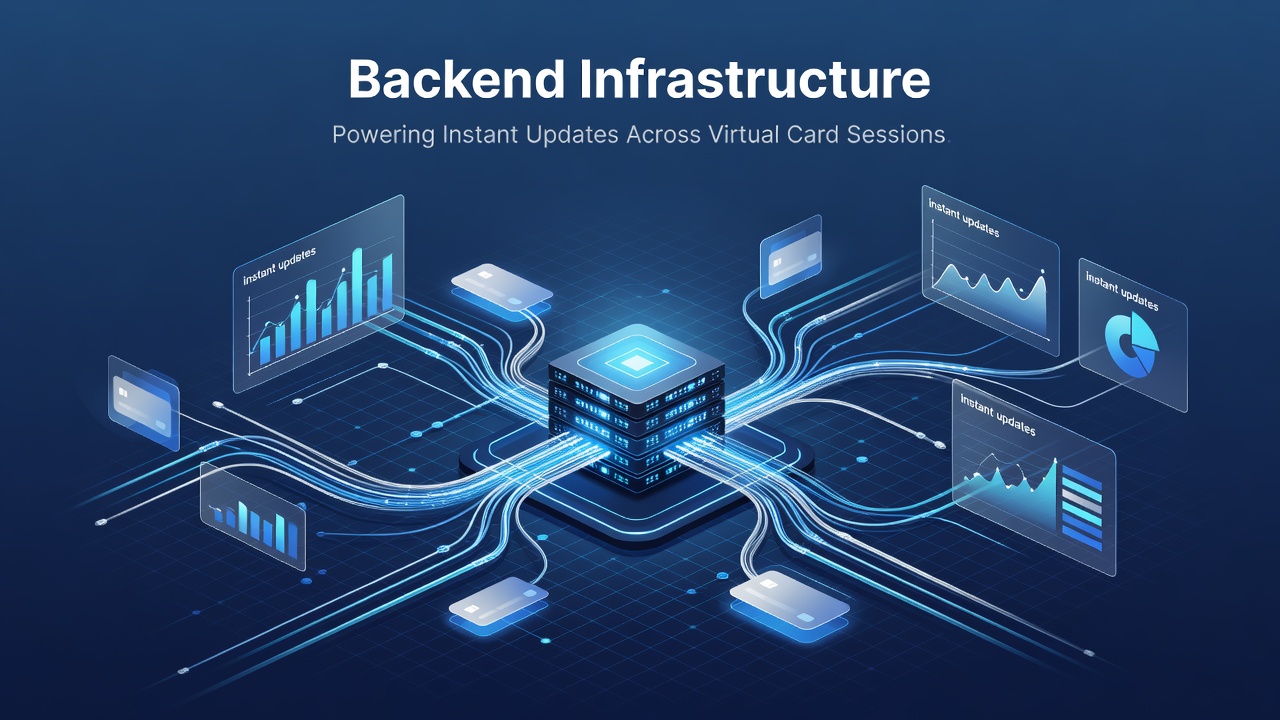
Studies from academic institutions in Canada have shown that combining WebSocket connections with backend event buses allows front-end applications to receive push notifications about card state changes within 50 milliseconds on average. This architecture proves especially valuable during peak usage windows, such as those observed in early June 2026 when transaction volumes spiked due to seasonal promotions across digital payment providers.
Database Choices and Consistency Models
Teams select database technologies based on the consistency requirements of each data category, often deploying NewSQL solutions like CockroachDB or TiDB for global session ledgers that demand strong consistency across continents. Meanwhile, eventual consistency suffices for analytics stores that aggregate usage patterns without affecting live authorization decisions.
According to reports issued by the Monetary Authority of Singapore, hybrid setups that replicate critical card session data to edge locations closer to users have reduced cross-region latency by up to 70 percent compared with centralized deployments. Observers note that these geographic distributions also improve fault tolerance, because traffic can failover automatically when one availability zone experiences disruption.
Security Layers Supporting Live Updates
Encryption at rest and in transit protects sensitive card details while tokenization services replace actual card numbers with limited-use tokens that expire after each session. Regulatory frameworks from the Reserve Bank of Australia require continuous monitoring of these token lifecycles, and backend systems log every state transition so that forensic teams can reconstruct sequences of events after any anomaly detection alert.
Multi-factor authentication flows integrate directly into the same real-time pipelines, allowing risk engines to evaluate device fingerprints and behavioral signals before approving balance updates or merchant authorizations. Figures released by the European Payments Council reveal that platforms using such integrated security models experienced fewer than 0.02 percent fraudulent transactions during monitored periods in 2025.
Scaling Strategies for Growing Session Volumes
Horizontal scaling through container orchestration platforms enables operators to spin up additional instances of update-processing services within seconds when metrics indicate rising queue depths. Auto-scaling policies tied to CPU utilization and message backlog sizes help maintain sub-second update guarantees even as concurrent virtual card sessions climb into the millions.
Load testing conducted by research groups at MIT has demonstrated that well-tuned infrastructures sustain 10,000 updates per second per node while keeping tail latencies below 200 milliseconds. These benchmarks become relevant during promotional events when user activity surges unexpectedly, requiring the system to absorb sudden spikes without degrading the perceived instant responsiveness of card controls.
Conclusion
Backend infrastructure that powers instant updates across virtual card sessions continues to evolve through tighter integration of streaming technologies, distributed databases, and edge caching. Organizations that invest in these layered architectures report measurable improvements in both reliability metrics and user retention, particularly as transaction patterns grow more complex in coming years. Continued refinement of consistency models and security protocols will determine how effectively these systems adapt to increasing global demand.